Opera Review: Götterdämmerung

I’m not much of a fan of opera. Never been much of a fan of musicals in general, although that is slowly changing. However, I do appreciate orchestral music, especially movie scores, which I suppose can be thought of as the operas of our times. Of the classical composers, Richard Wagner (to me) stands the tallest. His music is epic and very cinematic, a sign that he was ahead of his time. Of his operas, I know best the Nibelung Ring tetralogy, having listened to them all years ago over at a library while following the action with translated scripts. So when I saw a promo for a live HD broadcast of Götterdämmerung – the final installment in the Ring cycle – at the Metro Cinemas in Santurce, I just had to go.

No, it wasn’t the Metropolitan Opera House, but it was the next best thing.

First of all, a summary of the Ring cycle: there is a river (The Rhine). The Rhine has three maidens guarding the gold that lies in its depths. In comes a dwarf (Alberich), who manages to steal the gold and forge with it a ring of incredible power. But such a ring can only be forged by one who forfeits love, which of course Alberich does. At some point the gods get involved, the ring ends up in the hands (or claws?) of a dragon, the hero Siegfried kills… I’m sorry, slays the dragon, retrieves the ring, falls in love with a valkyrie named Brünhilde, is later tricked into winning Brünhilde (and the ring she now holds) for a king named Gunther, is betrayed (and murdered) by Gunther’s brother Hagen, Brünhilde tosses the ring into Siegfried’s funeral pyre, with her horse and herself following, the power of the gods wane and a new dawn of Man emerges.

Yes, I grossly oversimplified the plots of all four operas, can’t be helped. Also, if you are thinking some of this sounds familiar, yes, Tolkien did take some of these elements and incorporated them into his Lord of the Rings saga. It wasn’t Wagner’s entirely original creation, either; he took many elements from the Scandinavian sagas.

While the story itself is awesome, it’s the music that really shines. It begins in Das Rheingold (the first installment) with the very first cue, an amazing overture that musically captures everything you need to know about the magic of this world. The most famous surely is the beginning of the third act of Die Wälkure (the second installment), a theme commonly referred to as the Ride of the Valkyries. The third installment – Siegfried – has the title character’s wonderful heroic theme, and Götterdämmerung had its greatest moment with Siegfried’s Funeral March.

That funeral march was the definitive climax of the performance I went to see. For much of the five hours… yes, you read that right, five hours, I wasn’t expecting that and realized what I was in for with the first series of interviews during a break; anyway, for much of those five hours you could hear the music and the singing mixed in with the occasional cough. It’s like whenever you are supposed to be absolutely silent that’s when the cough decides to be a bitch and ruin your throat and everyone else’s fun. So on one end you had the chorus of singers at the Met, on the other the chorus of coughers at the Metro. Know what? As soon as that funeral march began, no one coughed. The audience as a whole was not fully invested in the show until that very moment. That’s music magic.

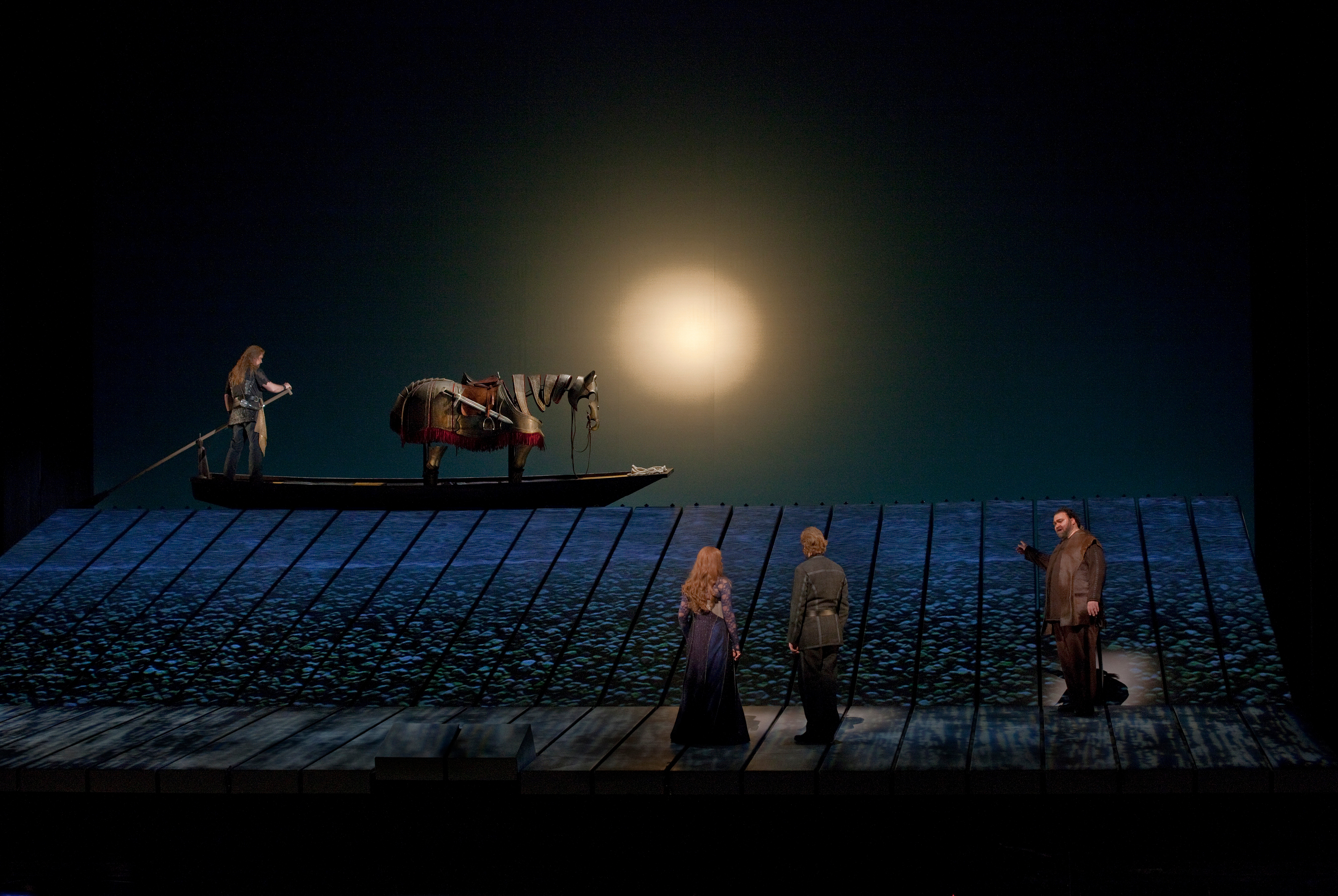
The staging of the opera was impressive. Ok, since this was the first time I saw a performance of Götterdämmerung, I can’t say it was better or worse than other performances, but I can see they spent some money on those moving sets, even if from an aesthetic perspective they weren’t all that. The main thing is that they conveyed effectively and with practicality what the scene required.

As for the characters, my favorite was Hagen. He’s sort of the main villain in this piece, and I think he did an outstanding job. Sigfried was good, Brünhilde was good, most of the cast was good, but Hagen knew how to pull your strings, so to speak.

So, while Götterdämmerung is not my favorite piece of the saga (in fact, it’s my least favorite piece of the saga), I enjoyed the show and was left wanting to see more of these productions. I was just a bit disappointed that an opera with the (translated into English) title of “The Twilight of the Gods” seemed to be the most grounded in Man’s world of the four operas. Damnit, I wanted to see those gods!

Goodreads Review: Mockingjay, by Suzanne Collins

Mockingjay (The Hunger Games, #3)Mockingjay by Suzanne Collins
My rating: 4 of 5 stars

Not exactly sure how I feel about this book. It did keep me glued to it for the two or three days it took me to read it, but it’s such a downer… and yet I liked how it didn’t go the cliché route and had Katniss doing typical heroic noble stuff. Hell, she messed up most of the time, and got plenty of people killed for nothing, but that was realistic, if you ask me. She might have been good enough to survive two Hunger Games, but she was no soldier, and too much was being asked of her, especially with all that pressure about being the Mockingjay and thus the target of the Capitol. Her constant psychological breakdowns were to be expected, though most people would have broken down completely way before she did.

I feel like Suzanne Collins just wanted to write an exploration of the human condition (basically, our capacity for cruelty), but for some reason went with a Young Adult series to do this. It will be really interesting how all of this suffering, gory violence, and psychological torture is translated to the big screen; “The Hunger Games” might have seemed to be a bit controversial for a YA movie, but that was nothing compared to this. It’s almost like the Harry Potter series jumping for the semi-lightheartedness of book two to the heavy grimness of book seven in just three books. You better grow up fast.

Speaking of Harry Potter, if “Catching Fire” reminded me of “Harry Potter & the Goblet of Fire”, “Mockingjay” reminded me of “The Dark Knight Rises”. How? Well, like the Dark Knight trilogy, the beginning was good, the second part was brilliant, and the conclusion was sort of grim, nowhere as good as the second part, but a satisfying conclusion nonetheless, especially the last lines, where Katniss and Peeta use the Real or not Real game one last time.

Yeah, from time to time I’m a sucker for corny endings too.

View all my reviews

Goodreads Review: Catching Fire, by Suzanne Collins

Catching Fire (The Hunger Games, #2)Catching Fire by Suzanne Collins
My rating: 5 of 5 stars

By far my favorite book of the series.

The ending of “The Hunger Games” left it clear that surviving the Games wasn’t the end of the road for Katniss, that now the Capitol’s feathers were ruffled and they had a rebellion to quell before it started. “Catching Fire” devotes the first half to Katniss trying (very unsuccessfully, of course) to cool down the rebellious spirits of the districts after Snow threatened her and her family. Since the book is called “Catching Fire” and not “Cooling Down”, you can pretty much know what happens next… except that, before that “next” thing happens – that’s for the final installment, “Mockingjay” – there’s a second Hunger Games Katniss has to attend to, for failing to cool down anything.

Once it got to that part, this book reminded me a lot, in a good way, of “Harry Potter & the Goblet of Fire”. In that book, a tournament of champions was set up, one in which Harry had no business to be in, and one which by the end will trigger the war between the wizards and the Death Eaters. Here it’s basically the same, with a Hunger Games that now feature past champions from every district, and one in which by the end will trigger the war between the districts and the Capitol. The set up of the Games themselves is more interesting than in the first book, and Katniss being forced into alliances with victors from other districts adds another interesting twist (since, of course, by the end there can be only one).

This is probably the easiest book in the trilogy to adapt to a movie, and am looking forward to how they do it.

View all my reviews

Goodreads Review: The Hunger Games, by Suzanne Collins

The Hunger Games (The Hunger Games, #1)The Hunger Games by Suzanne Collins
My rating: 4 of 5 stars

I’ll be honest: I was surprised by how much I liked this book. Not that it’s a masterpiece or anything remotely close to that, but it’s really entertaining (except for the first few chapters, which are a bit of a drag). Once it gets going, it does get going, and this is all thanks to Collins’ excellent narrative. It just FLOWS smoothly.

What puzzles me is how closely the movie (which I saw before reading this) resembled the book, and yet it completely lacked that sense of entertainment. I guess since the subject matter is a bit crude for a Young Adult audience – you know, the whole children killing children thing – they went with a very somber mood, effectively killing whatever sense of entertainment you might get out of this. The truth is, it reads very PG-13, and not the R you would think a story like this would be; Katniss, the heroine, never once succumbs to the depravity of the killing, and neither does Peeta, so despite the carnage you never feel any sort of morbidity. If anything, you probably feel the same kind of detached excitement over the whole thing that the people from The Capitol feel, which is a curious thing, considering how it’s Katniss who’s telling the story, Katniss who is the complete moral opposite of the citizens of The Capitol.

The romantic triangle, while forced, actually fits and adds to the tragedy. I have no problem with this, but with how it eventually became the center of attention. I guess that comes with the YA territory, and would have been worked differently had the story been aimed at a more adult audience.

View all my reviews

Goodreads Review: Farsighted, by Emlyn Chand

Farsighted (Farsighted, #1)Farsighted by Emlyn Chand
My rating: 4 of 5 stars

Harry Potter made wizards cool again. Edward Cullen made glowing pussyfied vampires “sexy” somehow. Artemis Fowl might still make child criminal masterminds the #1 fantasied future career in schools. And Alex Kosmitoras could follow in those footsteps and make psychics relevant beyond the late night paid programs.

“Farsighted”, the first novel by Emlyn Chand, follow the adventures of Alex Kosmitoras as he discovers his latent psychic powers, which include the ability to see the future, or string of possible futures. The whole future “seeing” has an irony attached to it, for Alex is blind. The interesting thing here is that he perceives the future the same way he perceives the present; he can’t literally “see” anything, but uses his other senses to make out what’s going on. That’s what sets this book apart from others aimed at the YA audience; Alex is not the most popular kid in school, or even falls in love with the most popular girl in school. He’s more the Peter Parker kind, the outcast, somewhat nerdy kid learning to become Spiderman and take responsibility for his powers. In fact, Spiderman is referenced at one point, when Alex decides once and for all to use his powers for the good of others, most immediately his best friend (and love interest) Simmi, who he thinks to be in grave danger due to some of his visions. Another reference – and a bigger influence on the creation of Alex’s character and his greek heritage – is Homer’s The Odyssey, which features a blind prophet. Alex is a modern version of this prophet, another creative twist in and of itself, for very rarely do the oracles or prophets get to star in their own adventures (with few exceptions, such as the biblical Elijah).

What about the story itself? While it didn’t blow me away, it was a good enough beginning to the series to want to read more. I guess that comes with being an origin story, where character development time is spent in place of “lock and load, let’s blow some shit up” time (or “let’s have some vision” time, I guess). And while Alex, Simmi and Shapri are no Harry, Ron and Hermione, they are a good enough trio in their own right, with plenty of conflict, both from being teenagers adjusting to each other’s personalities to the mild sexual tension between Alex and the two girls. There were a couple character actions that bothered me, such as the weird reconciliation between Alex and Simmi (weird enough that I was sure he was dreaming it until… well, it was obvious he wasn’t dreaming), and those coupled with the “not being blown away by the story” bit prompted me to give it four instead of five stars. Still a very good debut by Ms. Chand.

View all my reviews

Movie Review: War Horse & The Adventures of Tintin

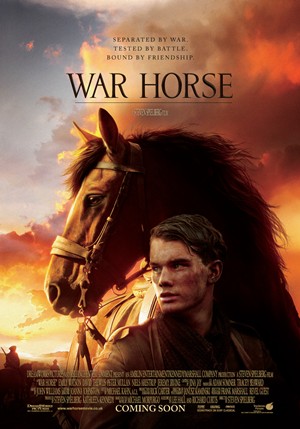
“War Horse”, directed by Steven Spielberg

Christmas 2011 saw Steven Spielberg come back to his roots as the creative director with the heart of a child and the positive outlook on the world. Hergé’s classic character Tintin gave him the chance to tackle once again the adventure genre he loves so much, while War Horse felt like a throwback to the old Hollywood movies where, even against the horrible backdrop of a war, you can find decency and goodness in everyone, gritty realism be damned. Both are vintage Spielberg movies, for better or worse.

I was more impressed (and surprised) with War Horse. Judging by the trailer I expected a movie filled with melodramatic fluffiness and a John Williams score swelling into emotional epicosity at just the right cues. I did get that, yet Spielberg – damn him to hell – managed to stir the child in me that used to love this sort of overtly optimistic storytelling. I was actually looking forward to the predictable and inevitable reunion between “Albert” (Jeremy Irvine) and his horse “Joey” (a bunch of stunt horses, I suppose). And not because I gave a crap about “Albert”; in fact, none of the human characters in the film are given enough depth for anyone to care. Nope, it’s the horse that’s developed, and very well developed he is. Fuck, Spielberg even managed to have the horse give a couple dramatic trailerish looks/poses (just check the trailer below), and those trailerish looks/poses had more dramatic weight than when someone like Brad Pitt or George Clooney do them. No, I’m not kidding, they did work well within the context of the film.

Before I forget, here’s a summary of the story: horse is born; “Albert” has nothing better to do than follow him around while he grows up, longing to make him his horse; Albert’s father foolishly buys the horse (they are poor and needed a plow horse to work the farm, not a thoroughbred); despite this display of stupidity “Joey” learns to plow the fields and nearly saves the farm; heavy rain ruins the crops; war erupts; father sells the horse to the military, while “Albert” cries; “Joey” changes hands (hah! horse racing pun… yeah, most of you won’t get it) several times during the war, going from the English to the Germans to the French and back again to the English via the Germans; “Albert” and “Joey” impossibly meet again (spoiler alert); there’s a last hurdle to jump (last horse pun, I promise) before they are finally together; end credits.

Takes a special kind of director to make a movie this sugary and full of flaws so damn good. He even convinced the good people at the Golden Globes awards.

“The Adventures of Tintin”, produced by Peter Jackson

Now let’s talk about The Adventures of Tintin. If you haven’t read the wikipedia link I, uh, linked to above, then suffice to know that “Tintin” is one of the most beloved fictional characters in Europe, virtually being their Indiana Jones way before Indiana Jones made his movie debut. Exchange archaeologist for the more realistically adventurous profession of reporter, add a sidekick dog called “Snowy” and you got “Tintin”. The Spielberg/Peter Jackson film is based on the story “The Secret of the Unicorn” (read the damn link, I won’t explain), and they did follow it very closely. It’s not that I have seen or read much of Tintin before the movie, but it felt like they managed to capture the essence of the characters and story. The problem was… it wasn’t that exciting. Yeah, there were some really nice sequences (especially in 3D), but it felt like a story that belonged in a Saturday morning cartoon and not a full fledged Hollywood movie. This sounds ironic when you consider that Indiana Jones himself was born as a homage to those serials of Lucas’ and Spielberg’s youth, but the films they ended up doing had all the epic quality of a blockbuster. This felt like a lot of work and money was put into something that wasn’t really that grandiose to begin with. I don’t know, maybe it’s all the hype around the movie and the character himself that’s blunting my sense of wonderment. I did enjoy the movie, mind you, I just wasn’t blown away by it.

Either way, both these movies make a nice addition to Spielberg’s resumé, and hopefully he will refocus on directing more, producing less. It is his imagination as a director that made Spielberg a household name, after all.

Next in line for him? A biopic of Abraham Lincoln. Sure will be interesting to see Spielberg’s take on that.

Goodreads Review: The Girl with the Dragon Tattoo, by Stieg Larsson

The Girl With the Dragon Tattoo (Millennium, #1)The Girl With the Dragon Tattoo by Stieg Larsson
My rating: 2 of 5 stars

Note: this review was originally posted in Goodreads on August 25, 2011

Wow.

I start the review with that word not because I was impressed by this novel but because I’m shocked it became such a hit. Really, what does this novel contain that has attracted so many people to it? I’ll try to keep this review spoiler free.

Let me begin right now by admitting that I did enjoy it, at least at some points. As soon as the two main characters got together the whole “mystery” that was the focus of the story for a while switched into another gear and blasted off. But…

…but, well, the manuscript needed some serious editing. The structure of the story is a mess; on one hand you have the Harriet Vanger investigation which masks as the main plot. When that is solved and done you have Blomkvist’s vendetta against Wennerstrom, which should have been a nice epilogue but instead took a life of its own and hijacked the novel. Not that it came out of left field, since Larsson took great pains to set it up at the beginning to then abandon it completely for the duration of the Vanger mystery. My theory is that he had two story ideas and then just decided to merge them into one overcomplicated plot. Had he stuck with one it would have made for a bearable novel; two was just lousy and forced writing (reminds me of Spiderman 3 and the stupid decision to have three underdeveloped and badly written plots involving the three villains).

To make matters worse the way each plot is solved is absurd. Vanger’s seem at first like Blomkvist was pure genius (with the help of Salander, the english title’s proclaimed main character) until you give it a bit more thought and realise just how many convenient incredible coincidences were needed to crack the mystery. In Wennerstrom’s case, the plot required the mastermind of a worldwide network of crime and financial evil (one that spun an incredibly complicated web of companies and subcompanies to cover his tracks) to be so utterly stupid as to have all the necessary evidence against his empire stored in one place – his personal computer. I know I promised no spoilers but that was so ridiculous I had to bring it up. Even stupider is how this empire crumbles without any sort of retaliation whatsoever against Blomkvist, not even a “fuck you”. Yeah, that was another spoiler.

I won’t mention the whole “men hating women” theme that gives this novel its original swedish title, except to agree that it was brought more for shock value than for an actual statement. No, the statement here was political, against all those evil financial reporters that don’t do their jobs and the corporations that oink oink their way into greed to the ruin of many good people’s lives.

What I will mention to conclude this review is that, even though I liked Blomkvist as a character and hero, he was too much the James Bond around women for my taste. None could resist this sexual marvel, not even the cold hearted and rebellious girl with the dragon tattoo. I have the feeling this was really how Larsson himself fantasized of being.

I initially gave The Girl With The Dragon Tattoo three stars out of five, because even at the end I was convinced I must have made some sort of mistake and really liked it a bit more than I felt I did.

But nah, two stars is my judgment.

View all my reviews

Book Review: Scorpio Rising, by Monique Domovitch

I’ll be completely honest here: I had no idea what this book was about when I picked it up for reading and reviewing. Judging by the title I figured it was some sort of spy novel, or any other sort of adventure driven piece.

Nope.

But the comedy of errors actually began when I started reading The Sting of the Scorpio and wondered why the hell the story seemed to begin right in the middle of a scene. It wasn’t until Chapter Three that I re-checked the Scorpio Rising tour e-mail (more details at the end of this review) and realized I was reading the sequel, which does begin right where Scorpio Rising ends.

Oh.

And I only had a day left to read and review an entire novel (I was already grotesquely behind schedule. Sue me.).

So I really didn’t have much time to actually enjoy the story, all the while reading a genre – Romance, as it turned out – that I’m not particularly fond of. Didn’t seem like the ideal set up, yet for all the hurdles, I actually enjoyed reading this book. In fact, what started as a lukewarm reading ended with a desire to pick the sequel immediately (not literally, it’s way past midnight and I’m sleepy).

Oh yeah, the story: Alexander Ivanov is a young Russian immigrant in New York with plenty of ambition and drive. His chosen path to glory is architecture, which is not a bad choice considering where he’s at. This kid reminded me a little bit of Joseph Gordon Levitt’s character in (500) Days of Summer, which is also a romance story with an architect in the lead. Architecture is sexy, I guess. Anyway, we follow his rise (he’s the title Scorpio, as in the astrology sign) at the same time as Brigitte Dartois’ increasing stardom as a painter in Paris in the 1950’s. Doesn’t take much to infer that Alexander is our MAN, and Brigitte is our WOMAN, and destiny has marriage in store for our heroes.

While the premise and plot follow the usual formula, that doesn’t stop it from being a fun read. In fact, there were several soap operish moments that I bookmarked on the Kindle because I enjoyed them so much. You know, the kind where you go “YEAH, TAKE THAT, BITCH!”. My favorite was the following: Brigitte is (innocently) being lead on by a rich guy who pretends to care for her in order to eventually have sex with her. His even richer wife, the one that holds all the cards in fact, is suspicious and the guy tries to be careful since, well, she holds all the cards and without her he’s nothing. But there’s so much horniness he can hold on before bursting, so he tries to seduce Brigitte and fails massively, but not before threatening Brigitte with taking everything away from her: the apartment, the clothes, the money, etc. Brigitte doesn’t take the bullshit and leaves the apartment after the guy storms out, but he doesn’t realize this until a few weeks later, when he returns to find it empty. In one of those “only in the movies” moments, his wife is right there waiting for him.

“I hope the screwing that whore gave you,” she said, sounding victorious, “was worth the screwing I’m about to give you.”

Ooooooooooooooooooooooooooooooooooooooooooooooh, hohoho!!!!

That’s not the only “TAKE THAT, BITCH!” moment in the novel, but it was the most satisfying. That line is epic.

The novel has no shortage of the obligatory asshole/bitch characters that make life miserable for our heroes (note on Alex Ivanov: he’s not a sweet angel either, he does start as an asshole himself before getting to be more likable, but that positively added a realistic, well-rounded dimension to the character). My favorite bitch was Anne Turner. Anne is the typical sexy woman who feeds on rich men’s riches in exchange for some fuck time with her. The couple chapters where she is prominently displayed were a joy to read. I mean, the way that bitch laid out her plans to trap the richest guy in the story was worthy of the Mission: Impossible team, or at least Lisbeth Salander in The Girl with the Dragon Tattoo. The novel also ends up perfectly with a cliffhanger of hers: Just wait till I find that damned Alex Ivanov. MEAOW!!!

Another aspect I liked about this particular novel was the structure. Instead of having Romeo and Juliet meet early in the story, each has his/her own plot and only near the end do the plots intersect, they finally meet and *swoon* fall in love. Neither has any shortage of soap operish troubles along the way, of course.

In short, considering how Romance is not my thing, reading this was a guilty pleasure. One that I plan to repeat with the sequel. Stay tuned.

But first, a word from our sponsors:

Announcing the Scorpio Rising Social Media Whirlwind Tour!

As part of this special promotional extravaganza sponsored by Novel Publicity, the price of the Scorpio Rising eBook edition has dropped to just 99 cents this week.

What’s more, by purchasing this fantastic book at an incredibly low price, you can enter to win many awesome prizes, including 2 Kindle Fires, Amazon gift cards up to $100 in amount, 5 autographed copies of the book, and 5 autographed copies of its recently released sequel, The Sting of The Scorpio. Be sure to enter before the end of the day on Friday, December 23rd, so you don’t miss out.

To Win the Prizes:

  1. Purchase your copy of Scorpio Rising for just 99 cents on Amazon or Barnes & Noble
  2. Fill-out the form on Novel Publicity to enter for the prizes
  3. Visit today’s featured event; you may win an autographed copy of the book or a $50 gift card!
  4. BONUS:  If you leave a comment on this blog post, you have another chance at $100!

…And I can win too!

Over 100 bloggers are participating in this gigantic event, and there are plenty of prizes for us too. The blogger who receives the most votes in the traffic-breaker poll will win a $100 gift card as well. So when you visit Novel Publicity’s site to fill-out the contest entry form, don’t forget to say that I referred you, so I can get a point in the poll.

The Featured Events include:

Monday, Blogaganza on Novel Publicity! We’re kicking-off on the Novel Publicity Free Advice blog. We’ll ask the writer 5 fun and random questions to get everyone talking. Leave a comment or question in response to the post, and you may win an autographed copy of Scorpio Rising or its sequel, The Sting of The Scorpio. Don’t forget to enter for the other contest prizes while you’re over there!

Tuesday, Twitter sharing contest!A tweet is tiny, only 140 characters. But on Tuesday, it could win you $50. Send the following tweet across the twittersphere, and you just may win a $50 Amazon gift card. Autographed copies of Scorpio Rising and its sequel, The Sting of The Scorpio, are also up for grabs. The winner will be announced Wednesday morning. Here’s the tweet:  Looking for a read that’s full of love, drama, and betrayal? Scorpio Rising has been reduced to 99 cents! http://ow.ly/7zA2s #whirlwind

Wednesday, Google+ sharing contest! Yup, there’s yet another awesome opportunity to win a $50 Amazon gift card, and this time it just takes a single click! Visit Google+ and share Emlyn Chand’s most recent post (you’ll see the Scorpio Rising book cover included with it). On Thursday morning, one lucky sharer will be $50 richer. Autographed copies of Scorpio Rising and its sequel, The Sting of The Scorpio, are also up for grabs. Three chances to win! How about that?

Thursday, Facebook sharing contest! Stop by Novel Publicity’s Facebook page and share their latest post (you’ll see the Scorpio Rising book cover included with it). It’s ridiculously easy to win! On Friday morning, one lucky sharer will be $50 richer. Autographed copies of Scorpio Rising and its sequel, The Sting of The Scorpio, are also up for grabs.

Friday, special contest on the author’s site! Win a Kindle Fire! Two are up for grabs! Visit Monique’s website to leave a comment on any of her posts and sign-up for her author newsletter. One person will win for each method, so be sure to do both.


Remember, it’s all about the books!

About Scorpio Rising: Set in New York and Paris amid the glamorous and competitive worlds of art and real estate, Scorpio Rising takes the reader from the late 1940s to the 1960s through the tumultuous lives of its heroes. Alex Ivanov is the son of a Russian immigrant and part-time prostitute. He yearns to escape his sordid life and achieve fame and fortune. His dreams of becoming a world-class builder are met with countless obstacles, yet he perseveres in the hope of someday receiving the recognition he craves. Half a world away, Brigitte Dartois is an abused teenager who runs into the arms of a benefactor with an agenda all his own. When she finds out that her boss has an ulterior motive, she flees again, determined to earn her living through her art. This career brings her fame, but also the unwanted attention of her early abuser.  Monique Domovitch’s debut novel, Scorpio Rising, is a compelling tale filled with finely etched characters and a superb understanding of the power of ambition. Scorpio Rising promises to resonate with all who once had a dream. Get it on Amazon or Barnes & Noble.

About The Sting of The Scorpio:  In Scorpio Rising, Monique Domovitch presented a compelling tale filled with colorful characters and the manipulation of power, ambition, and greed. Now she gives us its spellbinding sequel, The Sting of the Scorpio, where Alexander Ivanov returns to New York with his new bride, Brigitte. The real estate industry is ripe with opportunity. Blessed with irresistible charm, ambition, and the single-minded obsession to succeed, Alex plots and manipulates his way to almost mystical success. Everything he touches turns to gold, but it’s never enough. When a hostile takeover bid leaves him struggling to save his beloved company, he suspects those closest to him of plotting his downfall. Brigitte, the beautiful redhead who abandoned her country and her career to become his wife, feels alone. In return, Alex has betrayed her time and again, each indiscretion cutting deeper into her soul. Brigitte’s son, David yearns to be an artist, but Alex’s plans leave no room for such frivolous goals. He grooms a reluctant David to become the heir apparent until a devastating tragedy attracts the attention of another young man. The Sting of the Scorpio is a rich tale of a man at the mercy of his own greed and a woman bound by her need for love.  Get it on Amazon or Barnes & Noble.

About the Author:  Monique Domovitch began writing at the age of fifty-five. Two years later, she has two self-published novels—her Scorpio Series—and a three-book deal with Penguin, for books she has written under the name of Carol Ann Martin. Never seen without her laptop, Monique and her husband travel the world and divide the rest of their time between their homes in British Columbia and California. Monique loves to hear from readers! Visit her on her website, Twitter, Facebook, or GoodReads.

Movie Review: The Searchers

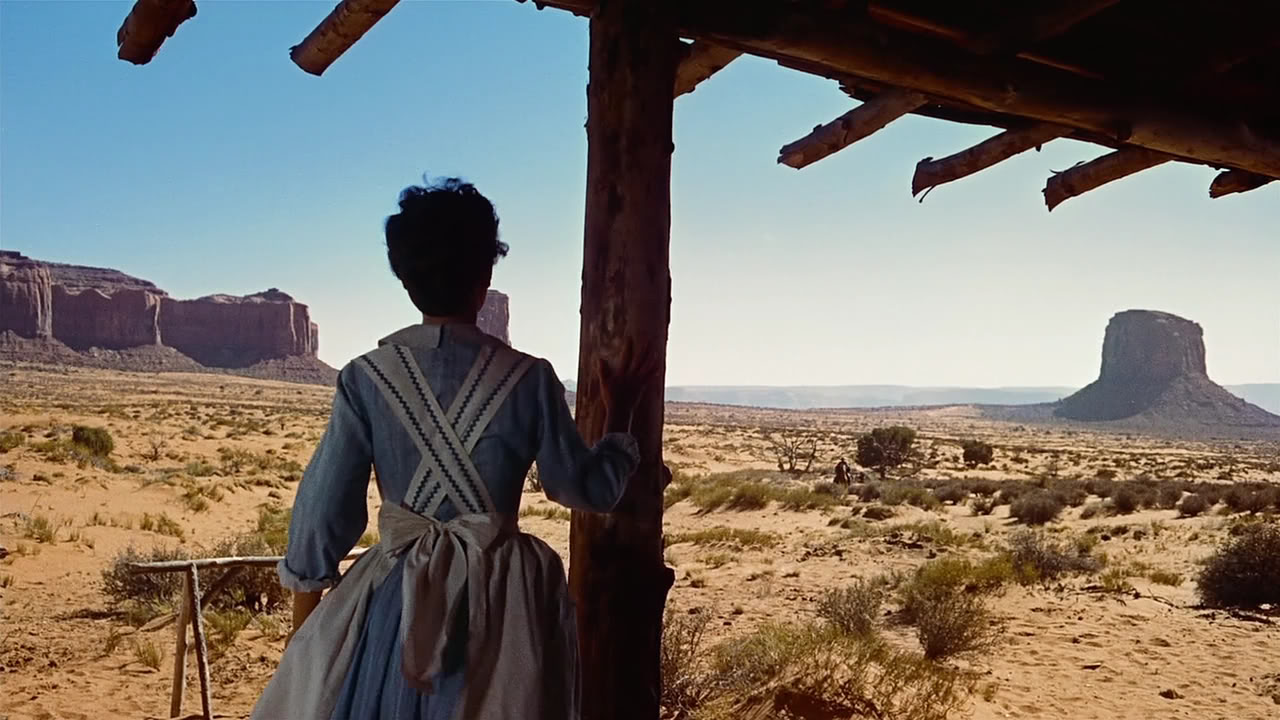
The opening shot in “The Searchers”

Once the beginning credits were over with and John Ford’s first shot of The Searchers came into full view, I went into “holy shit!” mode.

It was a simple shot, really. We begin inside a house and slowly move outside, following “Martha” as she goes out to greet the returning “Ethan Edwards” (John Wayne). It’s dark inside and what we initially see is a silhouette. Outside it’s bright enough, though, and as we go past the door Monument Valley, Arizona, is displayed in all its panoramic glory. It reminded me of the time earlier this year when I visited the Grand Canyon and was blown away by the 3D vistas (the depth of the canyon is so pronounced it felt like watching an IMAX movie in 3D). I had seen the Canyon lots of times in videos and pictures, but they didn’t do it justice, not by a long shot. It’s one of those places that you have to be there to truly appreciate it. That opening shot of The Searchers, however, came very close to that experience.

The storyline: it’s Texas, 1868. Ethan Edwards returns to his brother’s home after years of being away, first fighting in the Civil War (as a Confederate) and then… well, who the hell knows where he went those three other years, the thing is he’s back. The family is very happy to see him back, but he’s just like “meh”. Then tragedy strikes, as Comanche indians slaughter the entire family but for Edwards and “Martin Pawley” (Jeffrey Hunter), who were out searching for those Comanche, and “Debbie”, Ethan’s youngest niece who was kidnapped by the Indians (oh, shut it, I won’t be politically correct and write “Native Americans” every time). The rest of the movie is the search for Debbie, spanning several years until she’s 15. They eventually find her, of course, but what they find is not the Debbie they knew.

Martin Pawley (Jeffrey Hunter) and Ethan Edwards (John Wayne)

The Searchers is a classic, making basically all top ten Westerns lists, in some cases landing the #1 spot. I wasn’t impressed enough to make it my personal #1 Western, but it’s easily in my top ten, maybe top five. There are two reasons for that: John Wayne and John Ford.

Let’s start with Wayne. I’ll be the first to admit that, at this point in time, I haven’t seen that many John Wayne movies. I know him mostly by his reputation as the noble heroic cowboy that everyone looks forward to. His “Ethan Edwards” was anything but noble, though. He was a racist, mean motherfucker that couldn’t care less what you thought of him; for example, his nephew Martin was adopted (Martin was one eighth Cherokee), and Ethan never missed a chance to remind him both that they weren’t kin and that he had Indian blood. When Ethan’s driven – and the Comanche gave him plenty of drive – he wouldn’t stop until he got what he wanted. He had his own philosophy of life, one that wasn’t bound by incorruptible honor and gallantry, yet he does care, in his own fucked up way, about others. Wayne nailed this character through and through. I’m not surprised some consider this his finest performance, because it’s one of those that you cannot imagine being done in any other way by any other actor. Ironically, for such a great performance (and such a grand reputation for the movie as a Western and as a film in general), The Searchers received a grand total of zero Academy Award nominations.

Yeah, I guess the Oscars are overrated.

Then we have Ford. That opening shot alone made me understand why Akira Kurosawa and Sergio Leone (two of my favorite directors and two grand masters in their own right) had Ford in such high esteem and were so heavily influenced by him. What the film lacked in a strong plot more than made up for in direction, cinematography, and editing. Ford should have been nominated for an Oscar same as Wayne. The way he handled the shots made you feel like you were right there, galloping across the desert, surrounded by the Comanche, or attacking their tribe. It was brilliant, and made me wonder why most directors nowadays are so painfully… lazy. “Uncreative” would be another appropriate description, but that is mostly due to laziness and the obsessive attachment to formulaic shots and sequences. It’s like nowadays that majority of Hollywood directors are working on TV soap operas, while John Ford was working on actual Hollywood films. CGI is partly to blame, but not entirely; The Searchers looked much better than anything I have ever seen in the Western genre (Leone included), vastly – oh, oh so vastly – superior to George Lucas’ video game feel in Attack of the Clones, which had a similar red desert setting.

Speaking of George Lucas, there is a sequence in The Searchers that I’m pretty sure he… umm, borrowed for 1977’s Star Wars. As I briefly mentioned earlier, Ethan and Martin had joined a group of rangers to hunt down some Comanche that were known to be in the vicinities. Turns out the Comanche had lured the men out to attack their homes at will. They realize this and quickly return to their respective homes (well, except for Ethan, who was wise enough to allow his horse to rest before going back). What they come back to is a burnt house, and the burnt remains of the family. The sequence is very similar to the one where Luke meets Ben Kenobi and during their conversation realizes the stormtroopers would come looking for the droids at his home, where his uncle Owen and aunt Beru live. When he makes it back, all he finds are their burnt remains, with the house suffering a similar fate.

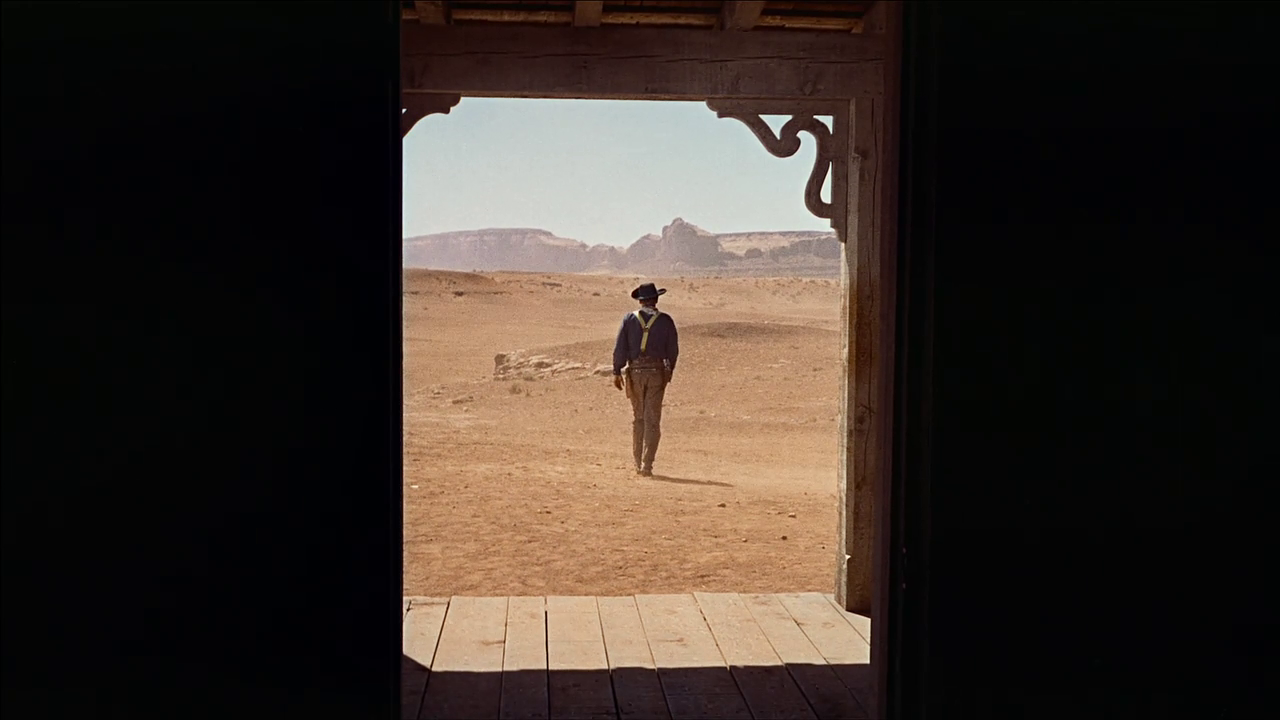
Not sure if Lucas meant that as a homage to John Ford or just decided to steal the fuck out of that sequence, but the fact that The Searchers is a major influence on so many filmmakers should come as no surprise. Ford and Wayne were at the top of their game here, and The Searchers is a movie that deserves to be seen, studied, and appreciated. It was only fitting – in fact, I was expecting it after that monumental opening – that the movie ended with a reverse shot of the first sequence, completing the circle as Ethan brings back Debbie, and then walks away.

Ethan Edwards walks away, and so does the movie.

Movie Review: Battle Los Angeles

The special effects star in Battle: Los Angeles

The special effects star in Battle: Los Angeles

Note: this review was originally published on March 20, 2011

If District 9 had cornered Black Hawk Down in a dark alley, raped it, and BHD – who does not believe in abortion – eventually has a child from that horrible experience, giving it up in adoption to Independence Day, and ID4 raises that child like its own without hiding from it its past, that child would grow up to be Battle Los Angeles. Which is not necessarily, or entirely, bad.Every movie has its place in cinema; not all can be Oscar contenders in the drama categories, so movies like Battle Los Angeles have to be judged differently from, say, The King’s Speech. One has to give it some leeway in terms of plot and character development, because it is clear movies like this sacrifice those things for the sake of spectacular action. And this movie has action from beginning to end, which is good to some people and overwhelming for others. I’m in that second group. Even though I like movies that begin with a bang and keep moving, if that action doesn’t take a breather now and then to allow the story to surface, my mind starts to drift as if activating a mental screensaver and I get lost in la la land. This is something purely personal and as I said it doesn’t bother lots of other people, and in the case of Battle Los Angeles it had to be that way since the main story takes place in the span of less than a day. There’s simply no time for character development and their interactions (which is pretty much the case for life in big cities like Los Angeles now that I come to think of it).

The “plot” is simple: a small platoon of marines must try to rescue a group of civilians stuck in Santa Monica and get out before the Air Force destroys the place to wipe out the alien invaders there. The next hour and a half consists of said marines trying to escape the chaos while Los Angeles is taken by the extraterrestrials (which, I must say, are the crappiest I have seen in a long time). In the end, of course, the marines go from defense to offense and this is where you can see the influence of Battle LA’s adoptive father, with an ending that will leave Starship Troopers with a strange sense of deja vu.

The movie never tries to be original. What’s more, it never tries to cover up its lack of originality. Its mission, like the marines, is simple: entertain. And just like the marines, it accomplishes its mission, but not without some casualties along the way.